How to Reduce International Shipping Costs from the UK
How to Reduce International Shipping Costs from the UK

If you are about to send a parcel abroad, the price on the screen can come as a shock, especially if it is your first time shipping internationally. The good news is that shipping cost is not fixed. Small changes to how you pack, measure, and choose your service can bring the price down, sometimes significantly, without sacrificing reliability. Here is what determines your cost and how to reduce it.
What Actually Determines International Shipping Cost?
Every courier prices a shipment using the same core set of factors, whether you are booking with DHL, FedEx, or UPS:
- Weight, the actual weight of your parcel
- Dimensions, the size of the box, used to calculate volumetric (dimensional) weight
- Destination, how far the parcel is travelling, and how accessible that country or region is
- Service speed, since express delivery costs more than economy
- Courier network, as different couriers price the same route differently depending on their network strength in that country
- Delivery requirements, such as signature on delivery, insurance, and residential versus business address, which can all add cost
Understanding which of these you can actually influence, and which you cannot, is the first step to shipping cheaper.
Measure Your Parcel Correctly
This is the single most overlooked reason people overpay. Couriers do not just charge by weight. They charge by volumetric weight, which compares the physical size of your box to its actual weight and charges whichever is higher.
A large, lightweight box, think a lampshade or a bulky but light jacket, can end up costing more than a small, heavy one. That is because the courier is really charging for the space it takes up on the plane or in the van, not just its weight on a scale.
Before you get a quote, measure your parcel properly. Length, width, and height, in centimetres, to the nearest whole number. Rounding down to be safe often means your quote is wrong and you get charged a correction fee after collection. Measure the box as packed, not the item alone.
Reduce Unnecessary Packaging Size
Because volumetric weight is such a big factor, the size of your box matters as much as what is inside it. If you are shipping a small item in an oversized box with a lot of empty space, you are paying to ship air.
Use a box that is genuinely sized to the item, and fill empty space with lightweight packing material rather than a bigger box than you need.
That said, do not reduce protection just to shrink the box. A box that is too tight for its contents risks damage in transit, and a damaged parcel costs you far more in replacement, reshipping, and customer trust than the packaging saving was ever worth. The goal is a snug, well protected fit, not the smallest box possible.
Compare Courier Services
Not every courier is cheapest on every route. DHL, FedEx, and UPS each have different strengths depending on the destination country, how established their local delivery network is there, and how competitive that specific lane is for them at the time.
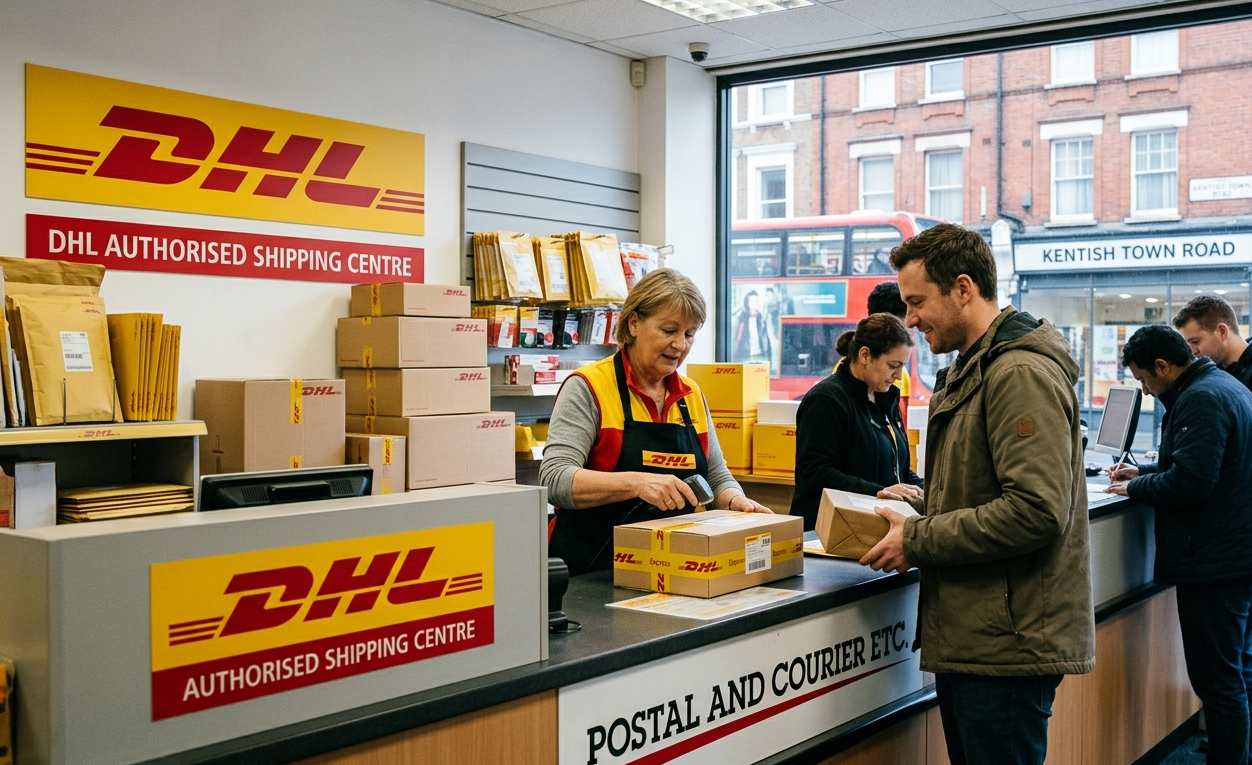
This is exactly why it is worth getting your parcel checked by a shipping centre that works with multiple carriers, rather than booking directly with just one. At Postal & Courier Etc, we are an authorised shipping centre for DHL, UPS, and FedEx, so we can compare live rates across all three networks for your specific destination. We recommend whichever genuinely works out cheapest and most reliable for that route, rather than you having to guess or check three separate websites yourself.
Choose Express vs Economy Based on Your Deadline
It is tempting to always pick the cheapest option, but that is not always the right call.
If speed is not important, you are not on a deadline, or the recipient does not need it urgently, economy shipping is usually the smarter choice. It costs less and the extra transit time rarely matters.
If time does matter, such as a business deadline, a gift for a specific date, or time sensitive documents, express shipping is often worth the extra cost. A cheaper economy service that arrives too late, or needs an emergency reship, ends up costing more overall.
The right choice depends on your actual deadline, not just the price difference on the screen.
How Parcel Weight and Dimensions Affect Price
Couriers calculate whichever is higher between actual weight and volumetric weight. Actual weight is what the parcel weighs on a scale. Volumetric weight is calculated from length multiplied by width multiplied by height, divided by a courier specific factor.
If your parcel is heavy for its size, like books or tools, you will typically be charged on actual weight. If it is large but light, like clothing or homeware, you will typically be charged on volumetric weight. Knowing which category your item falls into helps you predict, and reduce, your cost before you even get a quote, by adjusting either the packaging size or, where possible, the packing method.
Should You Use a Courier Comparison Service?
Online comparison tools can give you a rough idea of price differences between couriers, and they are a reasonable starting point if you are shipping something simple and low value.
Where they fall short is on anything with real complexity. Customs paperwork, restricted or high value items, business shipments requiring commercial invoices, or destinations with tricky import rules. A comparison website can quote you a price, but it cannot check your customs form is filled in correctly, catch a packaging issue before it becomes a delay, or tell you that a slightly more expensive service will actually clear customs faster and end up cheaper overall once you account for avoided delays.
For anything beyond a straightforward domestic style parcel, getting a quote in person or from a shipping centre that handles the paperwork with you is usually worth more than the small saving a comparison site might show.
10 Practical Ways to Reduce Shipping Costs
- Measure your parcel accurately before requesting a quote. Get length, width, and height right to avoid correction fees.
- Use a box sized to the item, not a larger box you happened to have lying around.
- Choose economy over express whenever your deadline allows it.
- Consolidate multiple items into one shipment rather than sending several small parcels separately, since most couriers charge a minimum fee per shipment.
- Weigh your parcel on an accurate scale, not an estimate. Underestimating leads to surcharges after collection.
- Compare rates across couriers for your specific destination rather than assuming one network is always cheapest.
- Avoid unnecessary extras like signature confirmation or high insurance values on low risk, low value items.
- Fill out customs paperwork correctly the first time. Errors and delays at customs can trigger storage fees and re-delivery charges.
- Use your own packaging where it is sturdy and appropriately sized, rather than paying for oversized courier branded boxes you don't need.
- Ask about business or regular shipper rates if you send parcels internationally often. Frequent shippers can often access better rates than one off online bookings.
How to Get an Accurate International Shipping Quote
The most accurate quote comes from having your parcel physically weighed and measured, rather than estimating online, since even small differences in dimensions can change which pricing bracket you fall into.
The fastest way to get a genuinely accurate, competitive quote is to bring your parcel into Postal & Courier Etc. As an authorised DHL, UPS, and FedEx shipping centre, we will weigh and measure it properly, compare live rates across all three networks, and recommend the option that actually makes sense for your destination and deadline, not just the cheapest number on a screen.
Ready to ship? Get a quote from Postal & Courier Etc or visit us at 58 Chetwynd Road, London NW5 1DJ. We will help you find the most cost effective way to send your parcel internationally.